A coffee maker machine for business is more than a utility appliance. In Singapore’s modern office environment, where the quality of the workplace experience is actively managed as a factor in recruitment and retention, the coffee machine is a daily cultural touchpoint. The difference between an office where the coffee is genuinely good and one where it is merely available shapes how people feel about their workplace in ways that are disproportionate to the cost of the equipment that makes the difference.
Coffee Culture in Singapore’s Offices
Singapore’s professional workforce has become increasingly coffee-literate over the past decade. The proliferation of specialty cafes, the rise of quality coffee as a social interest, and the exposure to diverse coffee cultures through travel and international work experience have all contributed to a population that has genuine expectations for what a good cup of coffee should taste like.
This literacy matters for offices because it means that the quality bar for what passes as adequate coffee provision has risen. The instant coffee sachets and filter-brew carafes that satisfied the previous generation of office workers are perceived very differently by a workforce that regularly visits quality cafes before and during work. An office coffee offering that falls well below what staff can access on the street undermines the implicit message that the office values its people’s daily experience.
A coffee maker machine for business that elevates office coffee culture meets this expectation by providing a quality of coffee that is genuinely comparable to, or better than, what staff would buy externally.
What Elevating Coffee Culture Actually Means
Elevating office coffee culture is a combination of equipment quality, coffee quality, and the social environment around the coffee station.
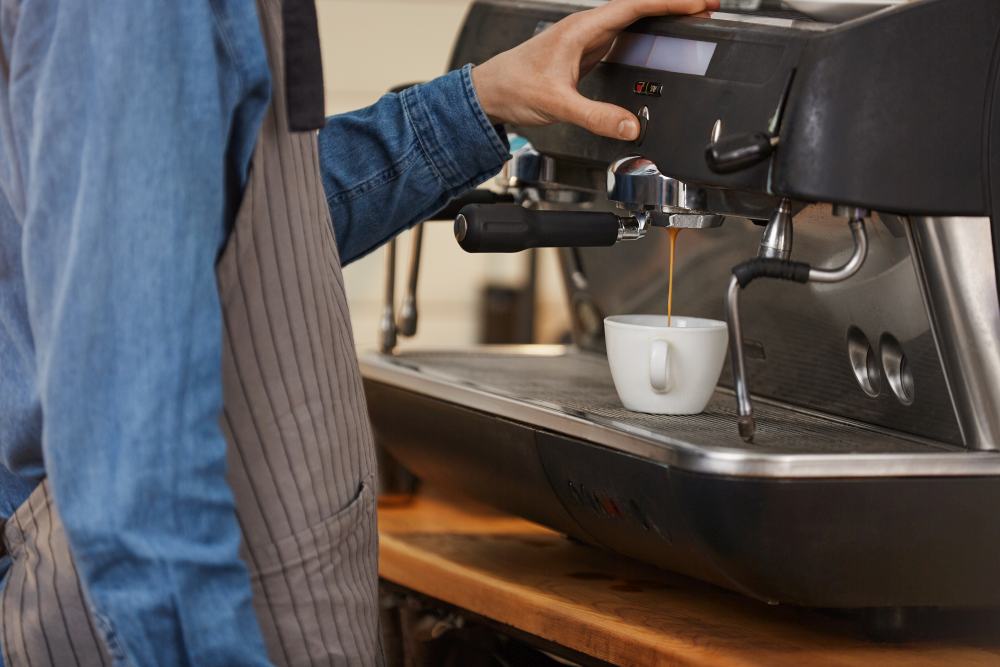
Equipment quality determines what is technically possible. A fully automatic bean-to-cup machine producing espresso-based drinks from fresh-ground arabica enables a quality ceiling that an instant coffee dispenser or a simple drip machine cannot approach.
Coffee quality determines what is actually realised within that technical ceiling. The best machine with poor-quality or stale beans produces mediocre coffee. Quality specialty-grade arabica beans, fresh within the optimal post-roast window, allow the machine to produce what it was designed to.
The social environment around a quality coffee station is where coffee culture actually lives. People tend to gather briefly around a machine that produces good coffee. These brief interactions, the conversation while waiting for an extraction, the comment on a particularly good batch, the recommendation of a new origin that has just been loaded – are the informal social tissue of office life. A coffee station that people actually want to spend a moment at is a small contribution to a workplace culture that feels human and connected.
As Singapore entrepreneur and workplace culture commentator Elim Chew has observed, “The best offices I visit always seem to have a coffee corner where people are actually happy to stand for a few minutes. It says something about the place.”
Machine Types for Different Office Cultures
The right coffee maker machine for business coffee culture depends on the specific culture being served.
Coffee-enthusiast office cultures where staff have strong preferences and genuine knowledge of specialty coffee benefit from a machine with more individual control: grind adjustment, temperature setting, and in some cases the option of manual espresso extraction. These offices treat the coffee machine as a platform for genuine coffee exploration.
Quality-without-complexity cultures where staff want excellent coffee without operational complexity benefit from a well-calibrated fully automatic bean-to-cup machine that delivers a consistent, quality result at the touch of a button. The quality is present; the effort required is minimal.
High-throughput cultures in large offices where peak demand is high benefit from machines with larger hoppers, waste containers, and faster extraction cycles that maintain throughput during the morning rush without compromising quality.
The Investment Case
The cost of providing quality coffee in a Singapore office is modest relative to the employment costs of the team. A fully automated bean-to-cup machine on a rental arrangement, including equipment, maintenance, and quality bean supply, costs a small fraction of a single month’s payroll for even a small professional team.
The return, in employee satisfaction signals and in the cultural impression the coffee offering creates, is disproportionate to that cost. A coffee maker machine for business that genuinely elevates office coffee culture is one of the most cost-efficient investments available in improving the daily quality of the workplace.